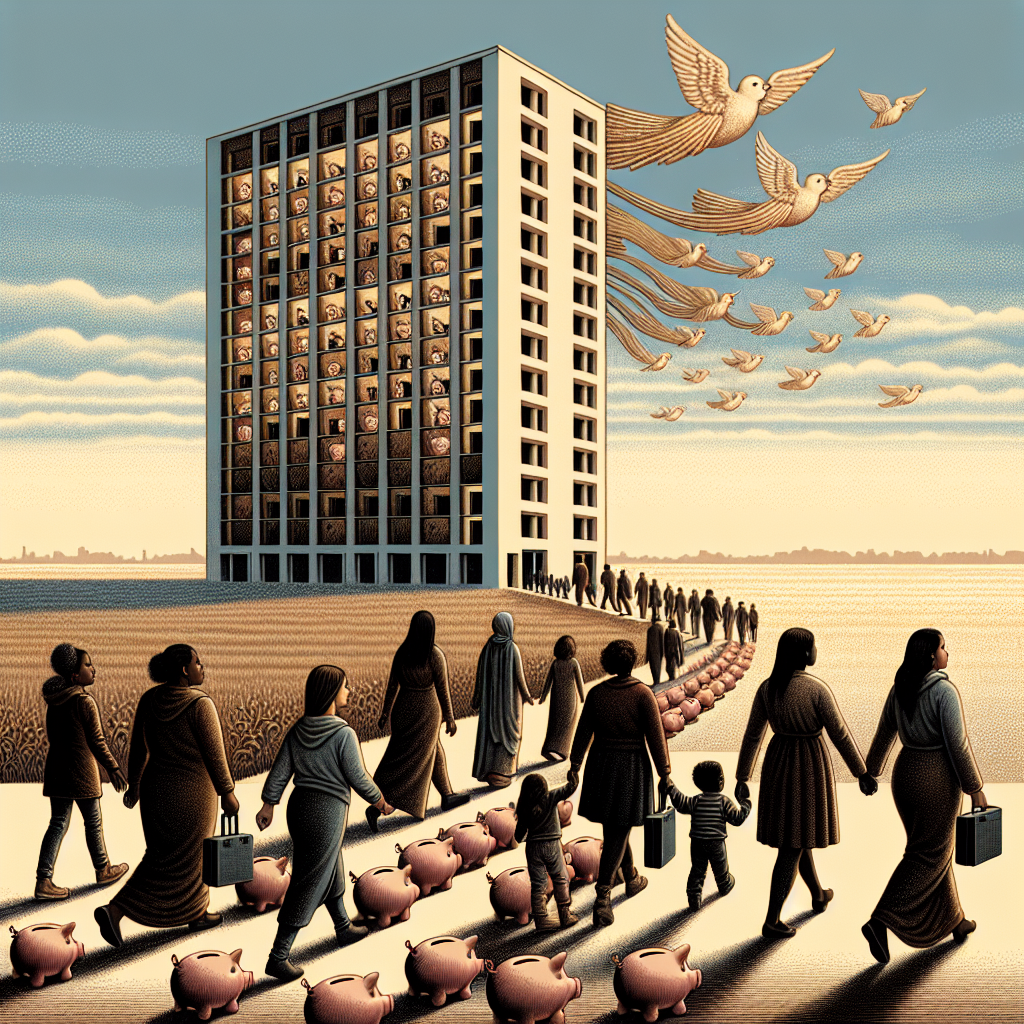
Women Say Caregiving and Child Care Costs Are the No. 1 Reason They Quit the Workforce Last Year
In 2025, 212,000 women ages 20 and over left the workforce, citing skyrocketing caregiving and child care costs as the primary driver, according to Bureau of Labor Statistics data released in August.[1][2][4] This exodus marks a sharp reversal from pandemic-era gains, where flexible work policies enabled more women—especially mothers—to thrive professionally while managing family responsibilities.[1]
The Stark Numbers Behind the Trend
The decline is particularly pronounced among women aged 25 to 44 with a child under five. Their labor force participation rate dropped nearly three percentage points between January and June 2025, from 69.7% to 66.9%.[1][2] This reverses a surge seen in 2022, 2023, and 2024, when remote work peaked participation at 69.7% in January 2025.[1] By contrast, 44,000 men entered the workforce during the same period, highlighting a gendered disparity.[1][2][4]
Women with bachelor’s degrees have been hit hardest. Their participation rate, which climbed to 70.3% in September 2024, fell to 67.7% by July 2025.[1] Economists like Misty Lee Heggeness, an associate professor at the University of Kansas, attribute this to eroded supports that once made dual-income households viable.[1]
Return-to-Office Mandates: The Flexibility Crunch
A major culprit is the widespread revocation of remote work in 2025. Full-time in-office requirements at Fortune 500 companies jumped to 24% in Q2 2025, up from 13% at the end of 2024, per the Flex Index.[1][2] High-profile moves included President Trump’s January order for federal employees to return five days a week, alongside policies from Amazon, JP Morgan, and AT&T.[1][2]
Julie Vogtman, senior director of job quality at the National Women’s Law Center, notes that women leveraged pandemic-era flexibility to stay employed, but its disappearance has forced tough choices.[1] A 2024 study of resumes at Microsoft, SpaceX, and Apple found return-to-office policies triggered exits among senior staff, threatening firm competitiveness.[1] Nearly two-thirds of C-suite executives reported a “disproportionate number” of women quitting due to mandates, according to a Walr survey for Upwork and Workplace Intelligence.[1]
This flexibility stigma disproportionately penalizes women. Lean In’s Women in the Workplace 2025 report reveals women face backlash for remote work, unlike men, contributing to burnout and attrition.[3] Senior-level women report burnout at 60%, versus 50% for men at their level.[3]
Child Care Costs: The Breaking Point
Beyond office mandates, child care affordability has become the top reason women cite for quitting.[1] Federal funding that kept centers open and tuition low ended in September 2024, leading to closures and price hikes.[1] Lower-income women in in-person jobs—already inflexible during the pandemic—are struggling most, as Vogtman explains: “Working women are finding it increasingly difficult to make the math work.”[1]
Heggeness adds that women often accept lower pay for jobs with telework, parental leave, and scheduling flexibility—like federal roles now facing layoffs under downsizing.[1] Without these, families can’t balance work and care.
Broader Economic and Social Fallout
The implications extend far beyond individual households. Single-income families face strain on housing, food, and transport, reducing consumer spending and slowing growth—evident in the first half of 2025.[1] Health benefits become precarious, and long-term economic stagnation erodes living standards.[1]
Corporate America feels the pinch too. Women leaders are switching jobs at record rates, higher than men, exacerbating underrepresentation from the “broken rung” at entry management.[3] One in four women considers downshifting or leaving due to reduced remote options and scaled-back women’s programs.[3] Ambition gaps widen: 80% of women want promotions versus 86% of men.[3]
Vogtman laments a cultural shift: “It’s like we didn’t learn anything,” with a zeitgeist of “you’re replaceable.”[1]
Paths Forward: Policy and Employer Solutions
Addressing this requires reinstating flexibility and child care supports. Research shows remote policies boost retention without harming productivity.[1] Companies prioritizing diversity see payoffs in fairness and inclusion, yet commitment trends down.[3]
Governments could extend funding; employers might offer on-site care or stipends. Heggeness urges valuing benefits that let women contribute fully.[1] As 2026 unfolds, reversing this trend demands action to harness women’s talent.
(Word count: 812)
Original source: CNBC Business – Women say caregiving and child care costs are the No. 1 reason they quit the workforce last year, according to new data
