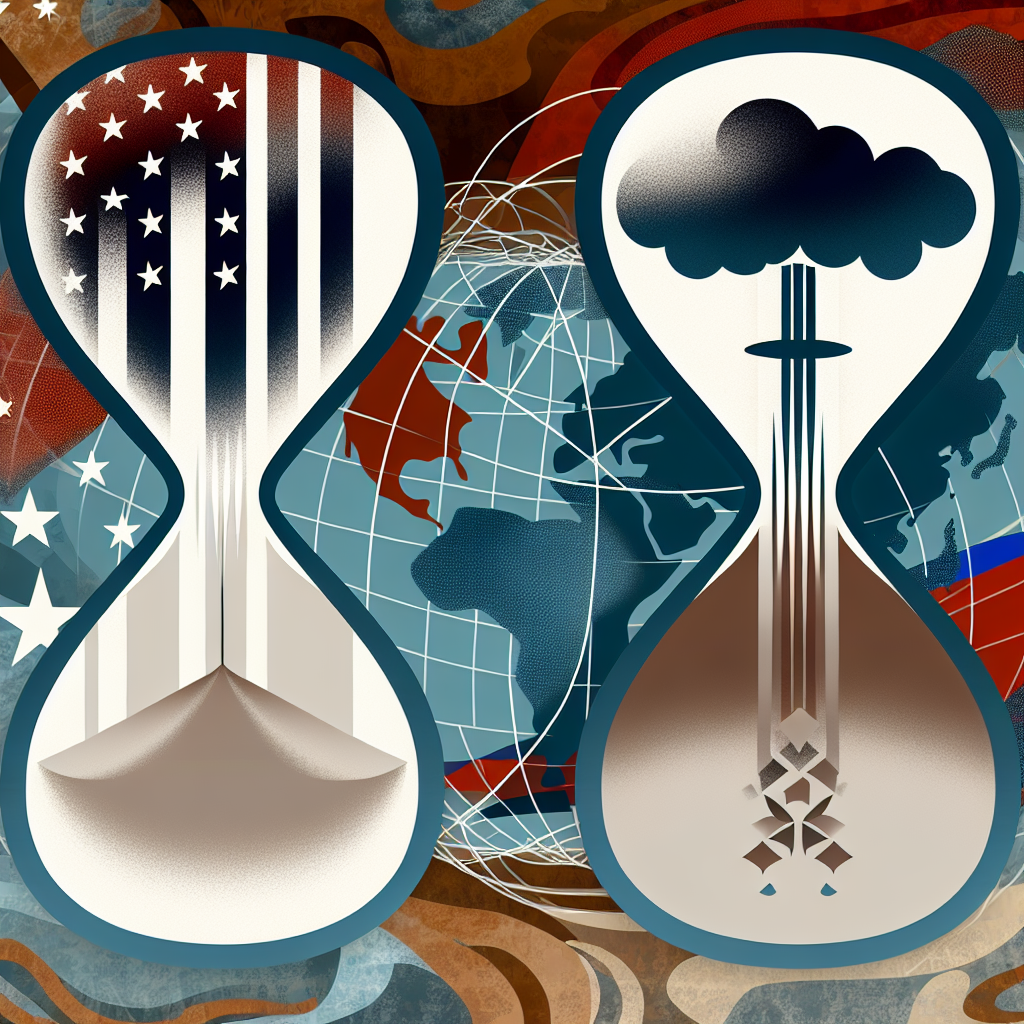
1. New START Treaty Expires, Freeing Russia and US from Nuclear Arms Limits
Russia announced on February 4 that it is “no longer bound” by the New START treaty’s restrictions on deployed nuclear warheads, as the agreement officially expires on February 5 following failed negotiations under the Trump administration.[1][2][9] This bilateral pact, the last major US-Russia arms control deal, had capped each side at 1,550 deployed strategic warheads since 2011; its end removes verification mechanisms and limits, prompting warnings from campaigners of a renewed arms race potentially drawing in China.[2] Putin had offered a one-year extension in September without US response, heightening tensions amid ongoing geopolitical strains.[1][2] Implications: Without constraints, both powers could expand arsenals, escalating global nuclear risks, deterring diplomacy, and straining defense budgets—particularly as US-Iran talks loom and Trump renews strike threats against Tehran.[4]
2. US Software Stocks Plunge 25% Amid AI Disruption Fears
The S&P 500 software sector has dropped over 25% since its October peak, with Wednesday’s sell-off hitting chipmakers and tech giants like Alphabet and Qualcomm over concerns that artificial intelligence will disrupt business models and white-collar jobs.[1] Markets saw volatility: Nasdaq 100 fell 1.8%, while S&P 500 dipped only 0.5%, amid softening labor data and delayed official unemployment figures due to a government shutdown.[1] Alphabet reported strong sales but signaled heavy future AI spending, exacerbating investor unease.[1] Implications: This “rotation” from tech-heavy indices signals broader market shifts, potential layoffs in software firms, and investor reevaluation of AI’s economic toll—could slow innovation funding while boosting non-tech sectors, with ripple effects on global supply chains.
3. US, EU, and Japan Launch Critical Minerals Partnership to Counter China
The United States, European Union, and Japan unveiled a trilateral partnership on February 4 to secure critical minerals like rare earths, essential for smartphones, electric vehicles, fighter jets, and renewables, amid China’s market dominance.[2] The deal focuses on coordinated trade policies, including border-adjusted price floors, to mitigate supply vulnerabilities exposed by Beijing’s export controls.[2] Announced after Washington talks, it aims to diversify sourcing and reduce dependency.[2] Implications: Strengthens Western tech and green energy independence, potentially stabilizing prices for EVs and defense tech while pressuring China economically; long-term, it could accelerate innovation in mining and recycling, but risks trade frictions if seen as protectionist.
