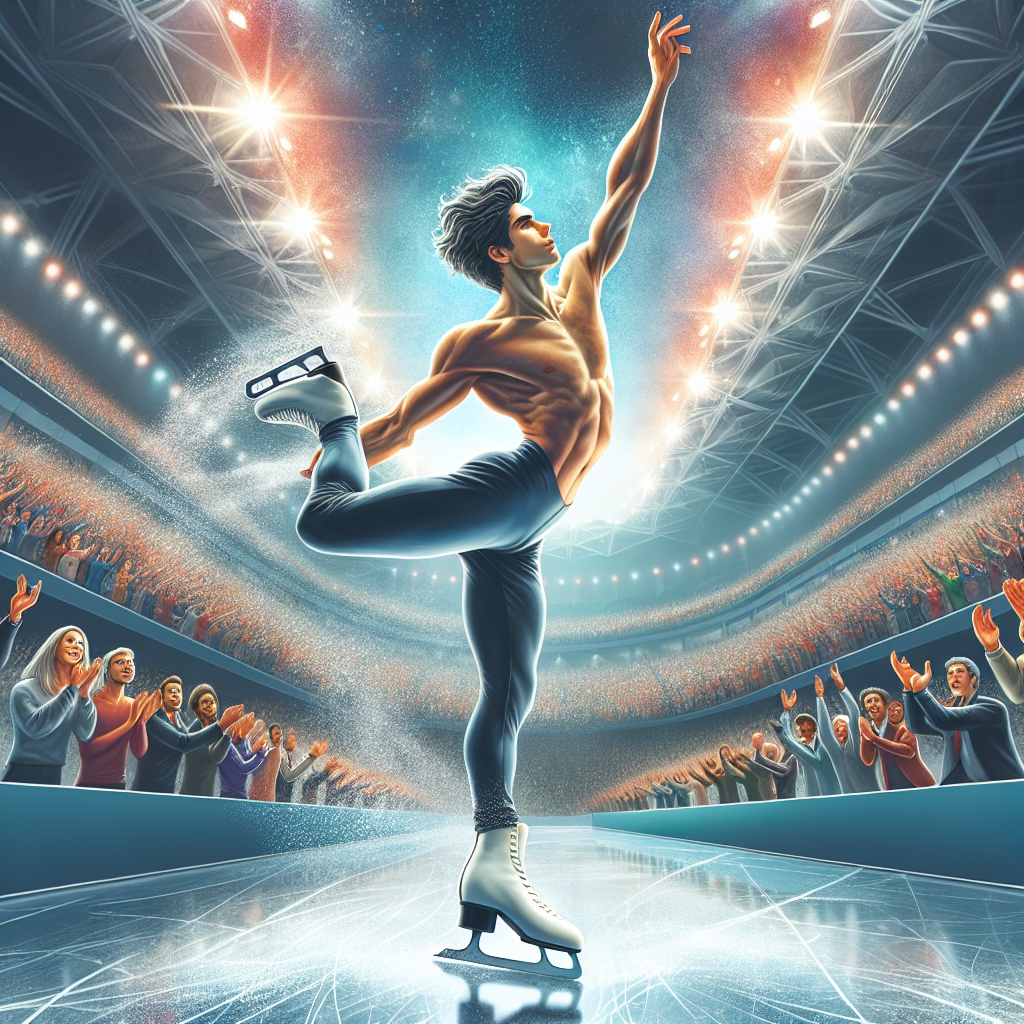
Ilia Malinin’s Olympic Backflip Made History. But He’s Not the First to Do It
In a electrifying moment at the 2026 Winter Olympics in Milan, American figure skater Ilia Malinin landed the first backflip in official Olympic competition, captivating the crowd despite finishing second in the men’s team short program.[1][2][3] This daring feat, legalized just recently, echoes trailblazers from decades past who pushed the sport’s boundaries.
The Night That Shook Milan
The Milano Ice Skating Arena pulsed with energy on February 7, 2026, as the men’s team short program unfolded. Ilia Malinin, the 21-year-old “Quad God,” stepped onto the ice for his Olympic debut amid sky-high expectations. Known for landing the only quadruple axel in competition history—a 4.5-revolution jump once deemed impossible—Malinin opened with a brilliant quad flip and closed with a quad lutz-triple toe loop.[1] His program to “The Lost Crown” earned 98 points, securing second place behind Japan’s Yuma Kagiyama, who dazzled with a quad toe-triple toe, quad salchow, and triple axel for the top score.[1][2]
Yet, it was Malinin’s choreography flourish—a flawless backflip—that stole the spotlight. Performed as part of his routine rather than a scored jump, the upside-down somersault ignited the arena.[1][2][3] “It was just awesome,” Malinin said post-performance, praising the crowd’s reaction. “It felt like a show to me honestly.”[1] Though he skipped his signature quad axel—opting for safety in the team event—the backflip underscored his innovator spirit, drawing comparisons to legends like Simone Biles.[1]
A Banned Move Makes a Comeback
Backflips weren’t always taboo in figure skating, but their Olympic history is fraught with controversy. The move was outright banned after the 1976 Innsbruck Winter Games, when American skater Terry Kubicka became the first man to land one in Olympic competition.[2] Judges struggled to score the high-risk somersault, sparking panic over safety and fairness. By season’s end, the International Skating Union (ISU) prohibited all somersault-style jumps.[2]
The ban lingered for decades. In 1998, at the Nagano Olympics, French skater Surya Bonaly defied it with a one-footed backflip during the exhibition gala—a protest after earning silver in the free skate.[1][2] Bonaly’s act, performed on one skate while facing a judges’ decision she disputed, became iconic but earned no competitive points and drew penalties in official events.
Change came slowly. In 2020, the ISU lifted the ban, allowing backflips as choreographic elements rather than jumps—meaning no base value or GOE (Grade of Execution) points, but potential for component marks if crowd-pleasing.[2] Malinin, with his gymnastics roots, seized the opportunity. “It fits the music and lights up the crowd,” as one report noted.[2] His execution in Milan marked the first in Olympic competition since Kubicka’s 1976 pioneering attempt.[1][2]
Malinin: Redefining the Quad Era
Malinin’s backflip caps a career of boundary-breaking. The Virginia native holds two world titles and a two-year unbeaten streak entering Milan.[1] His technical arsenal flirts with seven quads per program, chasing Nathan Chen’s world-record 335.30 points.[1] Choosing not to risk the quad axel here—he admitted forgetting to update his planned elements—Malinin focused on rhythm and drama.[1]
Kagiyama’s upset highlighted Olympic unpredictability. The Japanese star’s clean jumps and artistry prevailed, but Malinin’s flair kept Team USA competitive.[1] As the team event’s free skate and individual competitions loom, whispers of a quad axel or even a quintuple jump swirl.[1]
Echoes of the Past: Who Paved the Way?
Malinin’s moment honors predecessors who dared somersaults on ice. Terry Kubicka’s 1976 backflip, though scored low amid judging chaos, proved the move’s feasibility.[2] Surya Bonaly’s 1998 rebellion amplified its cultural lore, inspiring a generation despite the ban.[1][2] Even earlier, skaters experimented in shows, but Olympics demanded purity.
Today, with backflips legal (non-jump only), they add spectacle without upending scoring. Malinin’s gymnastic flair—honed from childhood—makes him ideal for such risks.[2] Commentators hailed it as a “new chapter in Olympic lore,” blending athleticism and entertainment.[1]
What’s Next for Figure Skating’s Daredevil?
Malinin’s Olympic journey is just beginning. “Enjoy every single moment,” he urged, embodying the games’ ethos.[1] Will he unleash the quad axel in individuals? Can Team USA overtake Japan? Milan’s ice promises more history.
Malinin didn’t win gold Saturday, but his backflip etched his name beside Kubicka and Bonaly. In a sport evolving toward acrobatics, he’s not just making history—he’s rewriting it. As fans await the free skate, one truth endures: figure skating thrives on bold innovation.
(Word count: 812)
Original source: NPR News – Ilia Malinin’s Olympic backflip made history. But he’s not the first to do it
