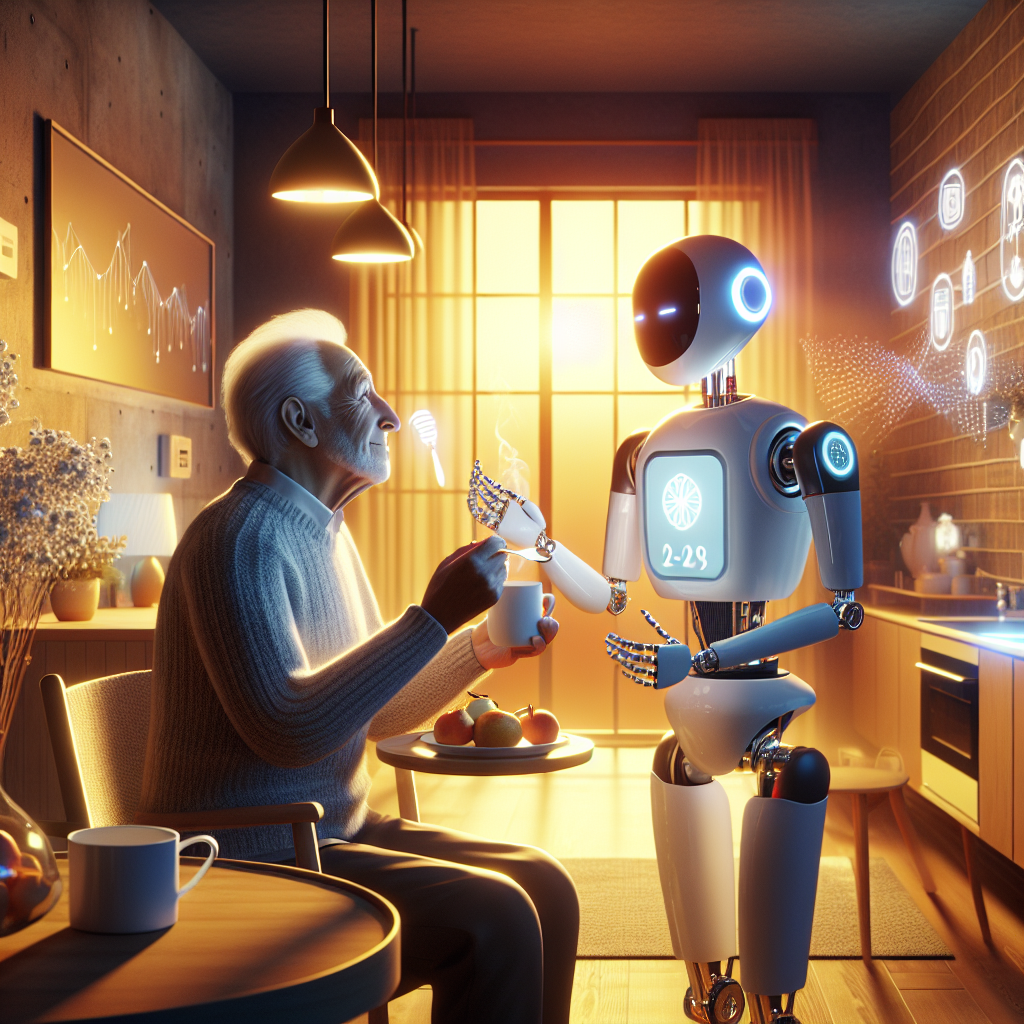
To Stay in Her Home, She Let In an A.I. Robot
The decision to invite a robot into your home is no longer the stuff of science fiction. As humanoid robots mature and companies develop machines specifically designed for eldercare and companionship, thousands of people are facing a profound choice: accept robotic assistance to maintain independence, or move into institutional care. This shift represents one of the most significant social transformations of our time, driven by aging populations and labor shortages that make traditional caregiving increasingly unavailable.
The Care Crisis Driving Robot Adoption
Countries with rapidly aging populations are experiencing an unprecedented shortage of human caregivers.[1] In places like China and Australia, the demographic reality is stark: there simply aren’t enough people to provide the hands-on assistance that elderly residents need.[1] Rather than waiting for more workers to materialize, robotics companies are positioning humanoid robots as a solution to this care crisis. These machines aren’t meant to replace human connection entirely—they’re designed to fill gaps, provide monitoring, and offer the kind of constant availability that human caregivers cannot sustain.
For many elderly people, the alternative to accepting robotic help is leaving home. Moving into care facilities or hospitals means surrendering the independence and autonomy that defines quality of life in later years. A robot in the home, by contrast, offers a path to staying put, to maintaining one’s own space and routines while still receiving necessary support.
Robots Built for Care, Not Industry
The humanoid robots entering homes today look and function differently from their industrial counterparts. Unlike the sleek, intimidating machines designed for factories, these care robots prioritize approachability and safety. Sprout, developed by Fauna Robotics, stands just 3.5 feet tall and wears soft, padded sage-green foam.[2] Its design philosophy reflects a crucial insight: if people are going to accept robots in intimate spaces, those machines need to feel non-threatening.
Other robots targeting the care market emphasize similar qualities. The Fourier GR-3, for example, is specifically designed for hospitals and care centers where people might need social companionship, emotional support, or caregiver-style assistance.[1] Devanthro’s Robody features soft skin for safe home use and can be customized to match a household’s aesthetic.[1] These design choices signal that companies understand the psychological dimension of bringing a robot into someone’s home—it’s not just about function, but about creating something people actually want to live with.
From Teleoperation to Autonomy
The current generation of care robots operates across a spectrum of autonomy. Some, like Devanthro’s offerings, are teleoperated—controlled remotely by human operators who provide real-time guidance.[1] This approach allows humans to maintain direct control while the robot handles physical tasks that might be difficult or dangerous for an elderly person. In Germany, the startup Devanthro has already tested its wheeled humanoid in more than a dozen care locations with hundreds of elderly residents.[1]
Other robots are advancing toward greater independence. 1X’s Neo, which is shipping to first homes in 2026, represents a major step toward autonomous household operation.[3] The company has indicated that Neo could achieve total autonomy as early as 2027, with the learning accelerated by data collected during initial deployments.[1] This trajectory suggests that future iterations will require less human oversight, though the question of whether robots should operate with minimal human supervision in intimate home settings remains ethically complex.
Building Trust in an Uncertain Technology
One of the most significant barriers to robot adoption isn’t technical—it’s psychological. Companies are acutely aware that people must feel comfortable with these machines in their homes. Some are attempting to build trust through animated LED eyes that display the robot’s “thinking” or cute digital voices that narrate their actions.[5] Others, like Realbotix, are developing humanoids designed to be barely distinguishable from real people, focusing on social companionship.[1]
But beneath the cute design choices lies a deeper question: What does it mean to let an artificial intelligence into the most private spaces of your life? A robot that monitors your home, assists with personal care, and has access when you’re not present raises legitimate concerns about privacy, autonomy, and dignity. These are not merely technical problems that better design can solve.
The Broader Transformation
What’s happening with care robots is part of a larger shift in how society addresses aging. Rather than fundamentally restructuring how we value and compensate caregiving work, we’re automating it. Rather than asking why we don’t have enough human caregivers, we’re building machines to fill the void. This approach may be pragmatic, but it carries implications worth considering carefully.
For the woman who chose to let a robot into her home, the decision likely came down to a simple calculation: a robot’s presence meant she could stay in her own home, maintain her independence, and avoid institutional care. In that context, the choice becomes less about embracing technology and more about survival—about retaining autonomy in a world that increasingly makes that difficult.
As these robots move from pilot programs to widespread deployment throughout 2026 and beyond, we’ll learn whether this solution genuinely improves lives or whether it represents a shortcut around harder social problems we should be solving differently.
Original source: The New York Times – To Stay in Her Home, She Let In an A.I. Robot
