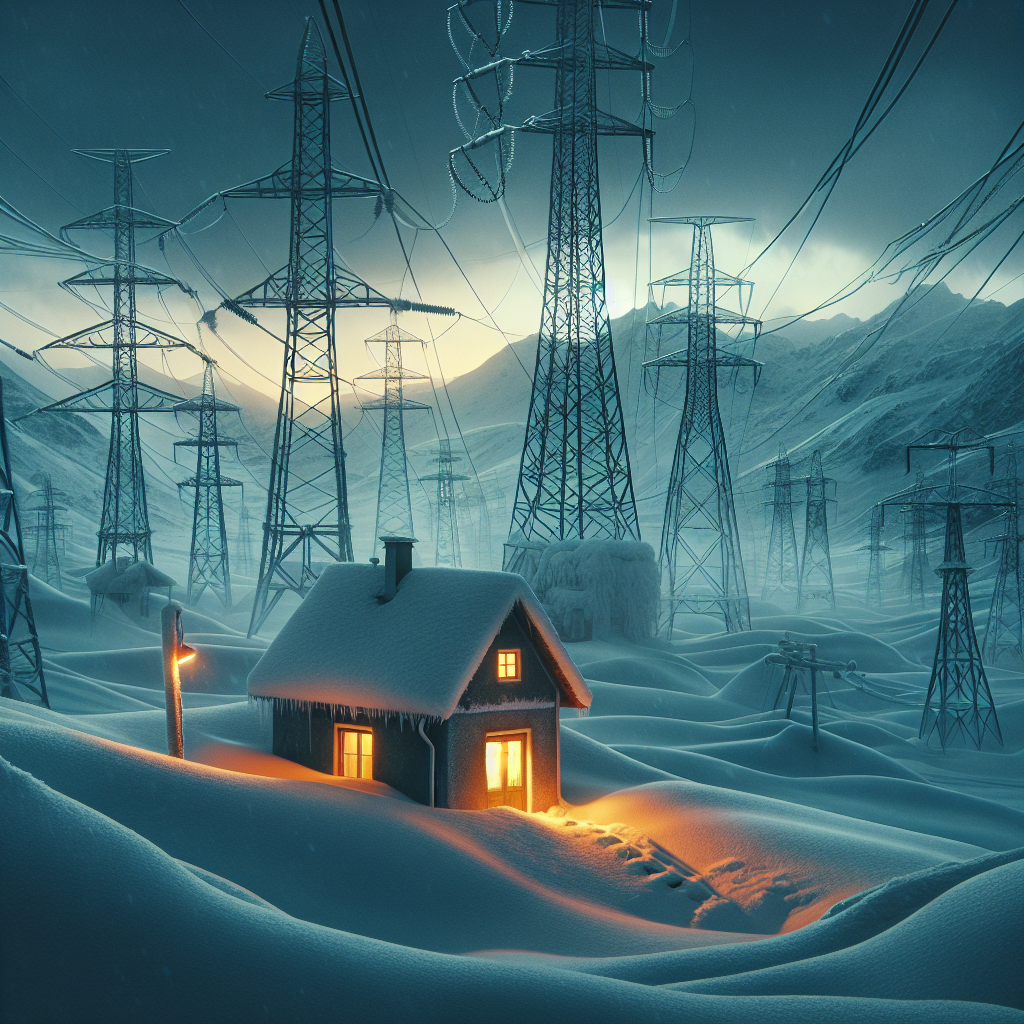
It’s Been Five Years Since Catastrophic Texas Blackouts. How Much Has Changed?
February 2021’s Winter Storm Uri plunged Texas into darkness, killing at least 57 people, leaving 4.5 million homes without power for days, and causing up to $195 billion in damages. [1][2][3] As we mark five years since that near-total grid collapse—when ERCOT came within minutes of a statewide blackout—questions linger: Has Texas fortified its isolated grid against extreme weather, or are vulnerabilities still lurking?[1][3]
Recapping the 2021 Nightmare
The blackouts stemmed from a perfect storm of extreme cold, surging demand, and widespread generation failures across natural gas, wind, coal, and other plants. [1][2][4] Wind turbines froze without winterization, gas pipelines iced over, and power plants tripped offline, knocking out 52,000 megawatts—nearly half the grid’s capacity—in hours.[1][3] ERCOT’s rolling blackouts spiraled into prolonged outages, with average power loss lasting 42 hours for 71% of affected Texans and water disruptions hitting 57%.[4]
Texas’ deregulated, standalone grid—isolated to dodge federal oversight—exacerbated the crisis. No interstate connections meant no backup from neighboring states.[1] Poor forecasting underestimated demand by 14%, and lax regulation had axed weatherization enforcement just before the storm.[1][4] ERCOT overcharged providers by $16 billion, bankrupting retailers and saddling consumers with bills.[1] Leadership fallout was swift: PUC commissioners and ERCOT executives resigned amid bipartisan fury.[1]
The human toll was grim: 22% reported family injuries or illnesses, 75% struggled for food, and vulnerable residents reliant on electric medical devices froze in homes dipping below zero.[4] Economically, losses ranged from $80-195 billion, halting manufacturing and rippling through GDP.[2][4]
Post-Crisis Reforms: Swift but Limited Action
In the immediate aftermath, Texas lawmakers passed Senate Bill 3 in 2021, mandating winterization of power plants and gas infrastructure, requiring ERCOT to maintain reserve margins, and imposing penalties for failures.[1] FERC and NERC’s final report urged stronger cold-weather rules, which Texas partially adopted via PUC oversight revival.[3] ERCOT added real-time monitoring, better forecasting tools, and incentives for battery storage to buffer peaks.
By 2023, most gas plants and turbines were retrofitted with heaters and insulated lines, credited with surviving subsequent winter snaps without mass failures.[1] The PUC reinstated the Texas Reliability Entity for independent audits, addressing pre-storm oversight gaps.[1] Governor Abbott’s emergency powers expanded, including faster imports during crises—though the grid remains disconnected.[1]
Yet progress has been uneven. Renewables’ share grew to over 30% by 2025, but critics argue wind and solar intermittency demands more firm gas backups, which lagged in weatherproofing.[1][2] ERCOT’s reserve margins improved but dipped below targets in summer 2024 heatwaves, prompting voluntary conservation alerts.[4]
Five Years On: Resilience Tested and Gaps Exposed
Fast-forward to 2026: Texas’ grid has endured milder winters without repeats of Uri-scale blackouts, thanks to winterization and added capacity like 5 GW of batteries.[3] Demand response programs cut usage during peaks, and microgrids in Houston and Austin provide localized backups.[1] Economic ripple effects? Minimal in recent events, with GDP growth buoyed by energy exports.
But change falls short of transformation. The grid’s isolation persists, rejecting federal interconnection despite near-misses—like the 4-minute cliff in 2021.[1][3] Deregulation endures, with energy retailers still volatile; a 2025 price spike echoed old overcharges.[1] Climate models predict fiercer storms, yet enforcement remains spotty—some plants skipped full upgrades due to costs.[3]
| Aspect | 2021 Status | 2026 Status |
|---|---|---|
| Winterization | Minimal; widespread failures [1][3] | Mandated for most plants; credited for stability [1][3] |
| Reserve Margins | Absent; led to blackouts [1] | Required but occasionally strained [1][4] |
| Grid Connectivity | Isolated [1] | Still isolated; imports limited [1] |
| Renewables | Vulnerable to freeze [1] | Expanded but needs backups [2] |
| Oversight | Dismantled pre-storm [1] | Restored with audits [1] |
| Economic Safeguards | Overcharges bankrupted firms [1] | Improved but prices volatile [1] |
Public surveys echo caution: 49% still fear economic hits from outages, and rural areas lag in microgrids.[4] Federal probes highlight Texas’ outlier status among interconnected U.S. grids.[3]
Lingering Vulnerabilities and the Path Ahead
Texas has winterized its hardware but not overhauled its isolated, profit-driven system. [1] Battery boom and AI forecasting help, but experts warn of “Uri 2.0” in a warming world with polar vortexes dipping south.[2][3] Connecting to national grids could import power seamlessly, yet political resistance to “federal overreach” blocks it.[1]
Community voices, ignored in 2021, now push for equity—prioritizing low-income and medical-needy households in load shedding.[1][4] Policymakers eye carbon capture on gas plants and nuclear restarts for baseload reliability.
Five years post-catastrophe, Texas is tougher but not invincible. Prevention demands transcending deregulation dogma: interconnect, enforce rigorously, and diversify beyond fossil fuels. Until then, every freeze carries echoes of 2021’s darkness. Texans deserve a grid that listens to warnings—and delivers light when it counts.
(Word count: 812)
Original source: NPR News – It’s been five years since catastrophic Texas blackouts. How much has changed?
