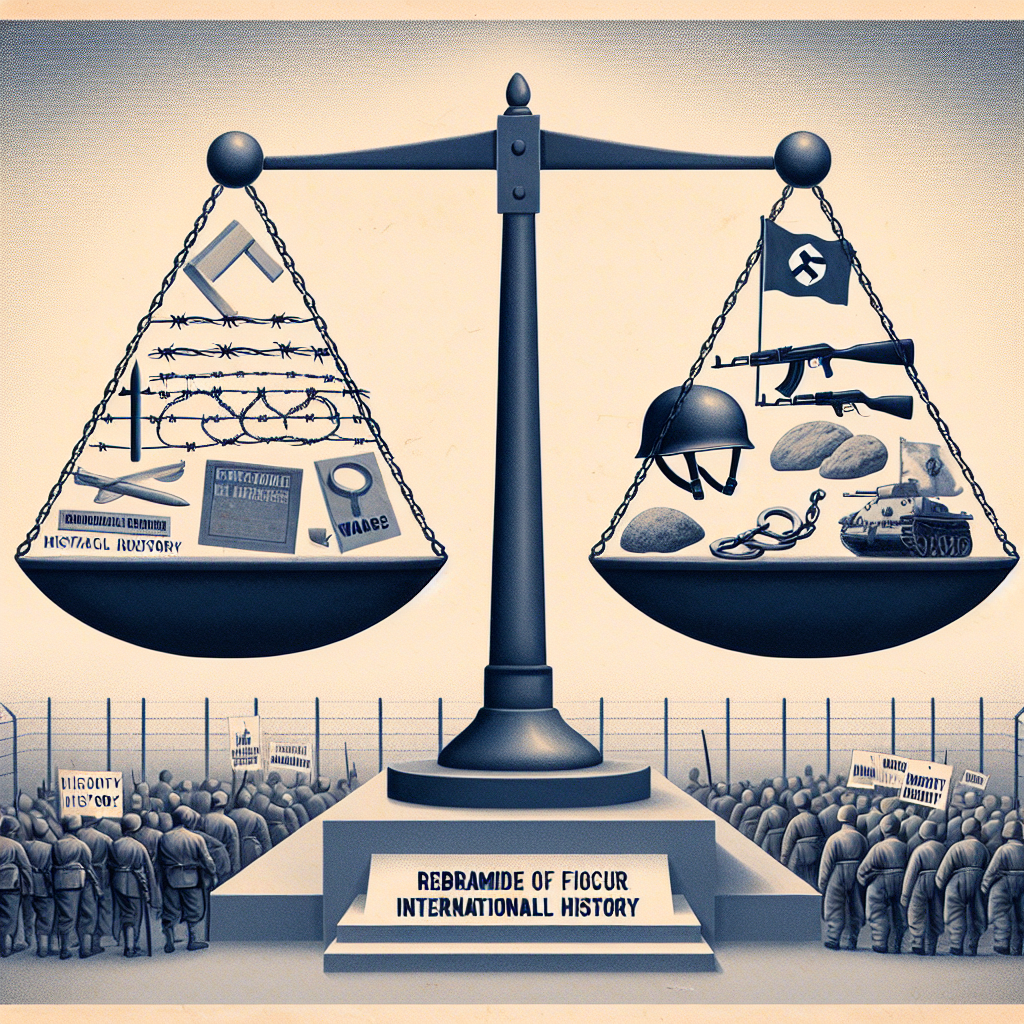
Russia Takes the Gulag Out of the Gulag History Museum in Moscow
In a move that has sparked outrage among historians and human rights advocates, Moscow’s Gulag History Museum—once Russia’s sole state institution dedicated to documenting Soviet-era repressions—has been renamed the Museum of Memory and repurposed to focus on Nazi war crimes during World War II[1][2]. Announced on February 20, 2026, this rebranding shifts the narrative from the USSR’s internal atrocities to portraying the Soviet people as victims of external genocide, aligning with Kremlin efforts to sanitize its past[1].
The Museum’s Original Mission and Abrupt Closure
Established in 2001, the Gulag History Museum stood as an award-winning beacon of remembrance, drawing on official records, personal artifacts, and survivor testimonies to illuminate the horrors of the Soviet Gulag system—a vast network of forced labor camps that claimed millions of lives through starvation, execution, and brutal conditions[1]. Exhibits vividly recreated the human cost of Stalinist purges, deportations, and political repression, making it a unique space for public education in a country where such topics have grown increasingly taboo[1][3].
The museum’s downfall began in November 2024, when authorities shuttered it citing “fire safety violations”—a pretext widely viewed as retaliation against then-director Roman Romanov[1][3][4]. Sources close to the institution revealed that Romanov refused orders from Moscow’s Culture Department to censor an exhibition on Soviet repressions, prompting the closure and his dismissal in January 2025[1][3]. Despite passing prior inspections, the move was seen as part of a broader crackdown, with the museum merged under the Museum of Moscow led by Anna Trapkova[3][4][5].
Even after closure, staff persisted with research, including expeditions and oral histories, but exhibits were altered: labels on artifacts from the 1930s “House on the Embankment”—once tied to Stalin’s Great Terror—were stripped of their repressive context[4][5]. A 2024 state policy overhaul further undermined the museum’s foundation by excising references to Gulag camps, mass deportations, and property confiscations, while adding denunciations of Ukrainian and Baltic “Nazi collaborators”[4].
The New Focus: From Gulag to “Genocide of the Soviet People”
The February 20 announcement, first shared by art critic Ksenia Korobeynikova on Telegram and confirmed on the museum’s website, declares the Museum of Memory will honor victims of the “genocide of the Soviet people,” covering “all stages of Nazi war crimes” in the Great Patriotic War (Russia’s term for WWII)[1][2]. Archival materials from the state-backed “No Statute of Limitations” project, tied to the Search Movement of Russia, will form the core exhibits[2].
New director Natalia Kalashnikova, a combat veteran previously heading the Smolensk Fortress museum, signals the ideological pivot[1][2]. Moscow City Hall anticipates a 2026 reopening, transforming the site into a propaganda tool that emphasizes Soviet victimhood amid WWII losses, overshadowing domestic crimes[1][6].
This reframing fits a pattern under President Vladimir Putin, where discussion of Soviet atrocities is suppressed amid intensified repression, exile of critics, and laws stifling dissent[4]. Independent outlets like Novaya Gazeta Europe and Meduza describe it as the Kremlin “quietly dissolving” the last legal bastion for Gulag memory, folding it into loyal institutions[1][3].
A Battle for Russia’s Historical Memory
Critics argue this erasure distorts history. The Gulag system imprisoned millions, with deaths estimated in the millions from the 1920s to 1950s—facts once central to the museum but now sidelined[1][4]. By redirecting focus to Nazi crimes, authorities reinforce a narrative of eternal Soviet righteousness, especially resonant amid ongoing conflicts referred to as the “special military operation”[4].
Personnel shifts underscore the purge: Trapkova, who oversaw a Museum of Moscow recruitment center during 2022 mobilization, now oversees the site’s remnants[4]. Cultural leaders, including some at the Pushkin Museum, face “combat training” with Ukraine war veterans, blending ideology with militarism[4].
Human rights groups and the Memory Foundation, linked to Romanov, decry the loss. Romanov remained on Putin’s Council for Civil Society and Human Rights into early 2025, but the museum’s fate was sealed[3][4]. As one source told Meduza, it marked “the end of a life cycle” for repression remembrance[3].
Implications for Truth and Remembrance
This transformation doesn’t just rename a building; it rewrites collective memory. In a nation where Stalin’s popularity rises in polls—buoyed by state media glorifying victory over fascism—the Gulag’s shadow fades[1][4]. Visitors expecting harrowing tales of internal terror will instead encounter WWII exhibits, potentially drawing school groups to a sanitized history.
International observers see parallels to authoritarian memory wars, from Poland’s Holocaust law battles to Turkey’s Armenian genocide denial[4]. For Russians, it closes a vital window: the museum was more than artifacts; it was confrontation with the past.
As reopening looms in 2026, advocates urge global support for exile archives and digital preservations. Without them, the Gulag risks vanishing—not into Siberian snow, but Moscow’s selective fog. The phrase “taking the Gulag out” captures this chilling erasure: a museum born of truth, reborn as propaganda.
(Word count: 812)
Original source: The New York Times – Russia Takes the Gulag Out of the Gulag History Museum in Moscow
