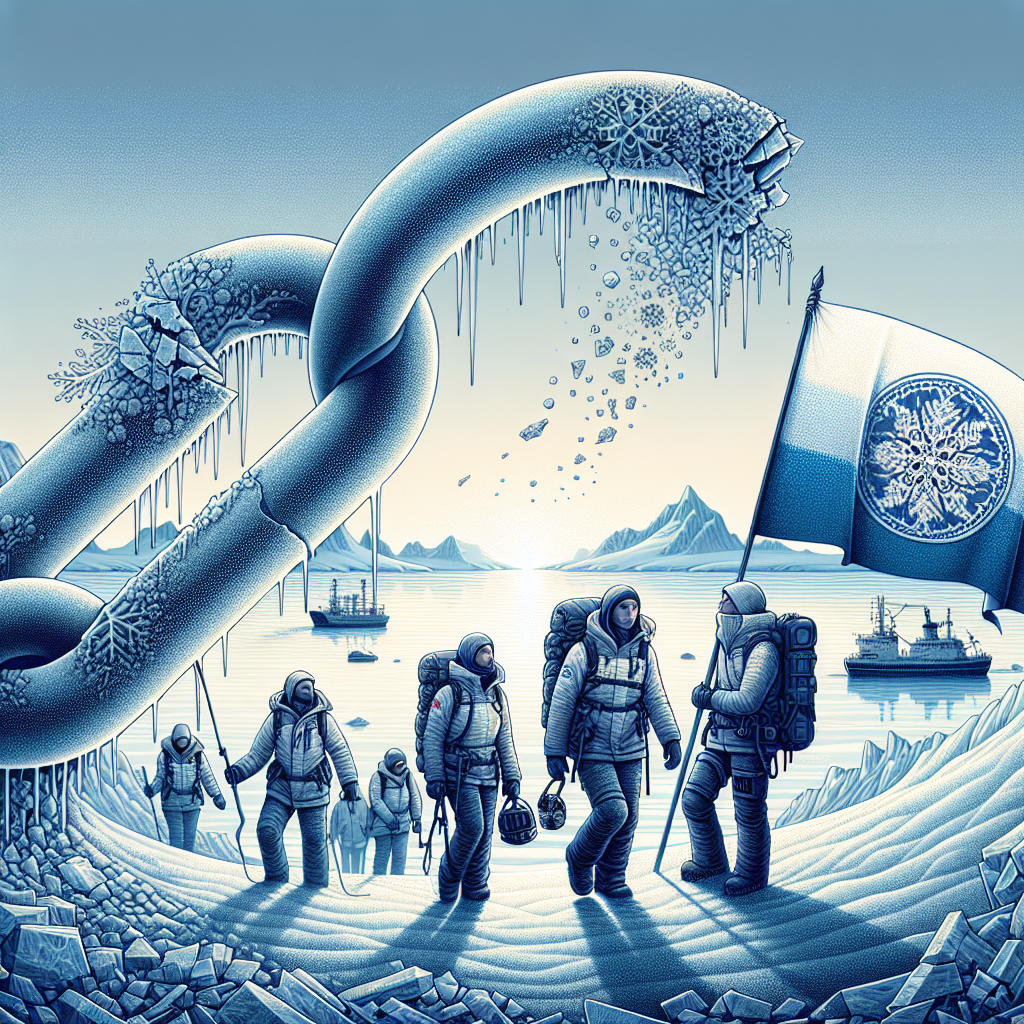
Who Is Not Funding This Antarctic Expedition?
As of early 2026, the ongoing Expedition Antarctica 2026—a scientific venture by Slovakia’s Technology and Innovation Park UPJŠ (TIP-UPJŠ) on King George Island—highlights a stark reality: the United States is not funding it. Amid Trump’s aggressive budget cuts to polar research, this self-funded European effort underscores a growing funding vacuum in Antarctica, where U.S. withdrawal leaves room for others to step in.[3]
U.S. Pullback: Trump’s 2026 Budget Slashes Polar Science
President Trump’s 2026 budget proposal delivers a devastating blow to Antarctic research, targeting up to 70% cuts in the National Science Foundation’s (NSF) polar research program.[1] This includes terminating nearly 2,000 NSF grants, laying off 25,000 scientists, and freezing operations like the lease for the Nathaniel B. Palmer, America’s sole Antarctic icebreaker.[4][6] Scientists like those planning 18-month studies at Palmer Station watched their cargo languish in Punta Arenas, Chile, as the vessel was decommissioned with just one month’s notice.[4]
The NSF’s U.S. Antarctic Program (USAP) explicitly bars support for private or foreign expeditions, emphasizing self-sufficiency.[2] In emergencies, limited rescue aid is possible, but only if it poses no risk to U.S. assets—and costs may be recovered.[2] For Expedition Antarctica 2026, led by figures like Assoc. Prof. Michal Goga, no such U.S. backing exists; the team navigates King George Island’s harsh weather—red curfews, group movements with walkie-talkies—entirely on their own, bolstered by a grant from the International Visegrad Fund.[3]
This retreat isn’t isolated. The budget halves funding for key operations, dropping from $7.94 million to $4 million, forcing staff reductions.[5] A New York Times report captures the chaos: an Office for Polar Programs director learned of her layoff while in Antarctica.[4] Experts warn of a “brain drain,” with grants expiring in 2026 pushing scientists abroad.[4]
Geopolitical Ripples: China and Russia Fill the Void
The U.S. funding drought amplifies concerns over Antarctica’s future as a demilitarized science haven under the Antarctic Treaty.[1] China and Russia are ramping up presence—China operates five Antarctic stations (Great Wall, Zhongshan, Kunlun, Taishan, Qinling) and boasts five icebreakers, eyeing Arctic expansion too.[4] British officials flag potential oil prospecting masked as science, while Russian and Chinese military vessels proliferate, eroding the treaty’s peaceful ethos.[1]
Bill Muntean of the Center for Strategic and International Studies notes: “Increasing the number of military vessels while decreasing scientific ones gives the appearance of militarization, against U.S. policy.”[1] With U.S. influence waning, Nordic countries and China may lead future expeditions, including collaborations like the MOSAiC Arctic mission.[4]
Expedition Antarctica 2026 exemplifies this shift. Funded domestically and regionally, it focuses on science, innovation, and adaptability in extreme conditions—sampling on King George Island despite blizzards.[3] Unlike U.S.-backed efforts now crippled, this Slovak-led push connects research to practical solutions, unhindered by Washington’s austerity.
Why the Funding Gap Matters for Global Science
Antarctica’s stability hinges on balanced international commitment. U.S. dominance—once the largest polar funder via NSF—enabled breakthroughs in climate, atmosphere, and ecology.[4] Trump’s cuts threaten this, risking AI, weather modeling, and polar climate data vital amid resource scarcity.[1]
Private expeditions like this one must insure against losses, as U.S. policy demands.[2] Yet, the broader implication is a power imbalance: reduced American scientific vessels could invite commercial exploitation of oil, gas, and minerals, unraveling the treaty’s ban on such activities.[1]
Scientists decry the fallout. NCAR, a hub for atmospheric research tied to MOSAiC, faces dried-up funds, scrambling personnel.[4] “The brain drain is the biggest story,” one U.S. polar expert laments, predicting 2026 grant endings will accelerate exits.[4]
A Call for Sustained Global Investment
Expedition Antarctica 2026 proves polar science endures without U.S. dollars—thanks to Visegrad support and institutional grit.[3] But for the continent’s peace and discovery mandate, all nations must counter the U.S. shortfall. China’s ambitions and Russia’s maneuvers demand vigilance; a diminished America invites competition over cooperation.
As Goga reports from the ice: weather tests endurance, forging science-innovation links.[3] Who else isn’t funding? Implicitly, any nation prioritizing geopolitics over research. The question isn’t just fiscal—it’s about safeguarding Antarctica’s role as Earth’s cooperative frontier.
(Word count: 812)
Original source: The New York Times – Who Is Not Funding This Antarctic Expedition?
