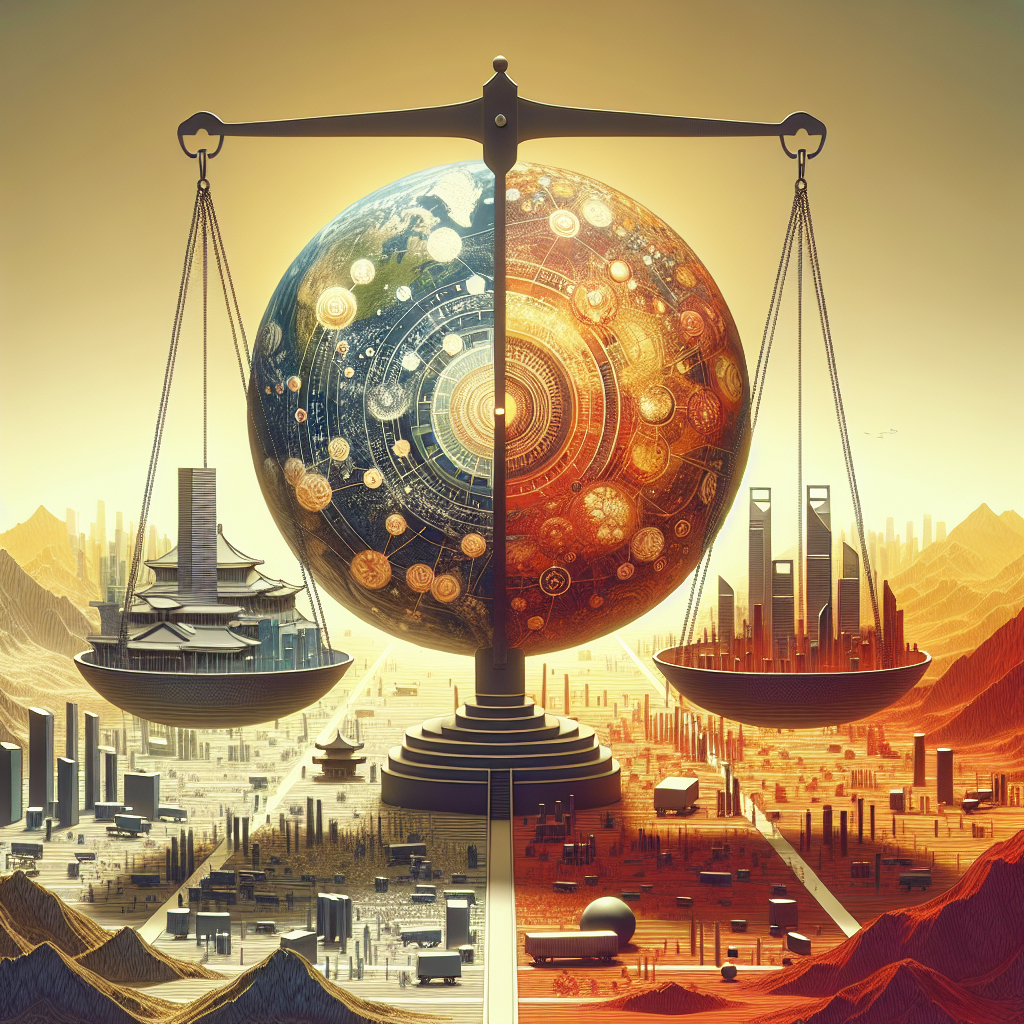
China and the U.S. Alter Foreign Aid Strategies
In early 2026, the United States and China are undergoing dramatic shifts in their foreign aid approaches, driven by domestic priorities and geopolitical rivalry. The U.S. has slashed traditional aid budgets under an “America First” doctrine, while China refines its Belt and Road Initiative (BRI) to emphasize strategic lending and infrastructure, potentially reshaping global development finance.[1][2]
U.S. Retreat from Traditional Aid
The U.S. foreign aid landscape has transformed radically following the shutdown of the United States Agency for International Development (USAID). In late 2025, over 80% of USAID’s $63 billion in earmarked funds were canceled, marking a sharp decline in official development assistance (ODA).[2] This move aligns with President Trump’s 2026 National Security Strategy, which prioritizes national interests through a proposed America First Opportunity Fund (AIOF). The AIOF aims to enable rapid, flexible responses to opportunities that advance U.S. goals, such as countering rivals and securing resources, rather than broad humanitarian efforts.[4]
Experts warn this freeze creates openings for competitors. The Associated Press noted Trump’s aid cuts could hand China a stronger foothold on the world stage, while The New York Times questioned who would fill the gap left by U.S. withdrawal.[1] Trump’s State of the Union address in 2026 highlighted this pivot, cheering Republicans while criticizing Democrats, and ironically adopting elements of models once dominated by China—like infrastructure-focused aid—even as Beijing evolves away from unchecked lending.[8][3]
This realignment reflects broader “America First” rhetoric, incorporating resource access for critical minerals and supply chains. For instance, policies target competition with China over territories like Greenland and heighten tensions in trade wars, indirectly tying aid to national security.[3] In regions like West Africa, such as Guinea, the U.S. sees opportunities to leverage mineral wealth against Chinese influence, but scaled-back aid limits its leverage.[7]
China’s Evolving Development Finance Model
China, meanwhile, has disbursed $1.34 trillion in development finance over two decades, primarily via the BRI launched in 2013.[2] Unlike traditional OECD Development Assistance Committee (DAC) aid, China’s portfolio blends ODA grants with other official flows (OOF)—preferential loans, export credits, and commercial investments—targeting infrastructure and energy in resource-rich nations.[1][2]
Beijing’s strategy serves multiple aims: politico-diplomatic (e.g., UN vote support, isolating Taiwan), economic-commercial (boosting exports and company “going out” strategies), and strategic (securing oil, minerals, and footholds).[2] AidData tracks how China leverages reserves for critical minerals in BRI countries and has extended $240 billion in rescue loans to 22 distressed debtors by 2021, positioning itself as a “lender of last resort.”[1]
Recent adjustments show restraint amid global scrutiny. The Wall Street Journal reports China reining in infrastructure while maintaining ambitions, amid a $2 trillion reckoning in geopolitically pawned ports.[1] The 2021 white paper on international development cooperation upgrades aid to a “model” linked to BRI and UN Sustainable Development Goals (SDGs), emphasizing people-to-people ties and soft power in the Global South.[2] Initiatives like the Global Development Initiative (GDI) promote infrastructure-driven growth, filling voids in healthcare and unmet needs where Western ODA falls short.[2]
The China International Development Cooperation Agency (CIDCA), established to coordinate these efforts, underscores strategic policy-making.[6] Surveys of Global South leaders reveal demand for Chinese projects, with over 13,000 financed between 2000-2017.[1]
Geopolitical Implications and Rivalry
These shifts pit U.S. retrenchment against Chinese expansion, altering the international aid regime. With OECD DAC budgets declining, China’s model challenges DAC norms, offering alternatives unbound by conditionality.[2] In BRI nations like Pakistan, Angola, and Kazakhstan—major loan recipients—Beijing secures energy and alliances.[2]
The U.S.-China trade war exacerbates this, with Trump allowing Nvidia chip sales to China in 2025 while pressuring Taiwan’s “silicon shield.”[3] America’s aid cuts leave Chinese efforts uncontested, raising questions about Beijing’s willingness to expand ODA-equivalent spending.[5][2] Yet China takes a measured approach, prioritizing trade-induced growth over sheer volume.[2]
| Aspect | U.S. Strategy (2026) | China Strategy (as of late 2025) |
|---|---|---|
| Primary Focus | National security, AIOF for flexibility[4] | BRI infrastructure, OOF loans[1][2] |
| Budget Scale | 80% USAID cuts ($63B slashed)[2] | $1.34T over 20 years[2] |
| Key Motives | “America First,” resource access[3] | Strategic footholds, SDGs, soft power[2] |
| Examples | Greenland push, Guinea minerals[3][7] | Rescue loans ($240B), minerals control[1] |
This table highlights contrasts: U.S. aid shrinks to targeted interventions, while China’s grows strategically.[1][2][3][4]
Future Outlook
As of early 2026, the aid vacuum risks ceding influence to China, but U.S. innovations like AIOF could counter this if effectively deployed. Beijing, wary of debt traps and overextension, may foster cooperation with DAC donors while promoting its model.[2] Policymakers must navigate this landscape, where aid intertwines with trade wars, AI races, and resource battles. The global South stands to gain from competition but faces risks of geopolitical pawns. Understanding these dynamics—through data from AidData and SIPRI—is crucial for stakeholders.[1][2]
(Word count: 812)
Original source: NPR News – China and the U.S. alter foreign aid strategies
