NASA Loses Lunar Trailblazer Spacecraft One Day After Launch: New Report Reveals What Went Wrong
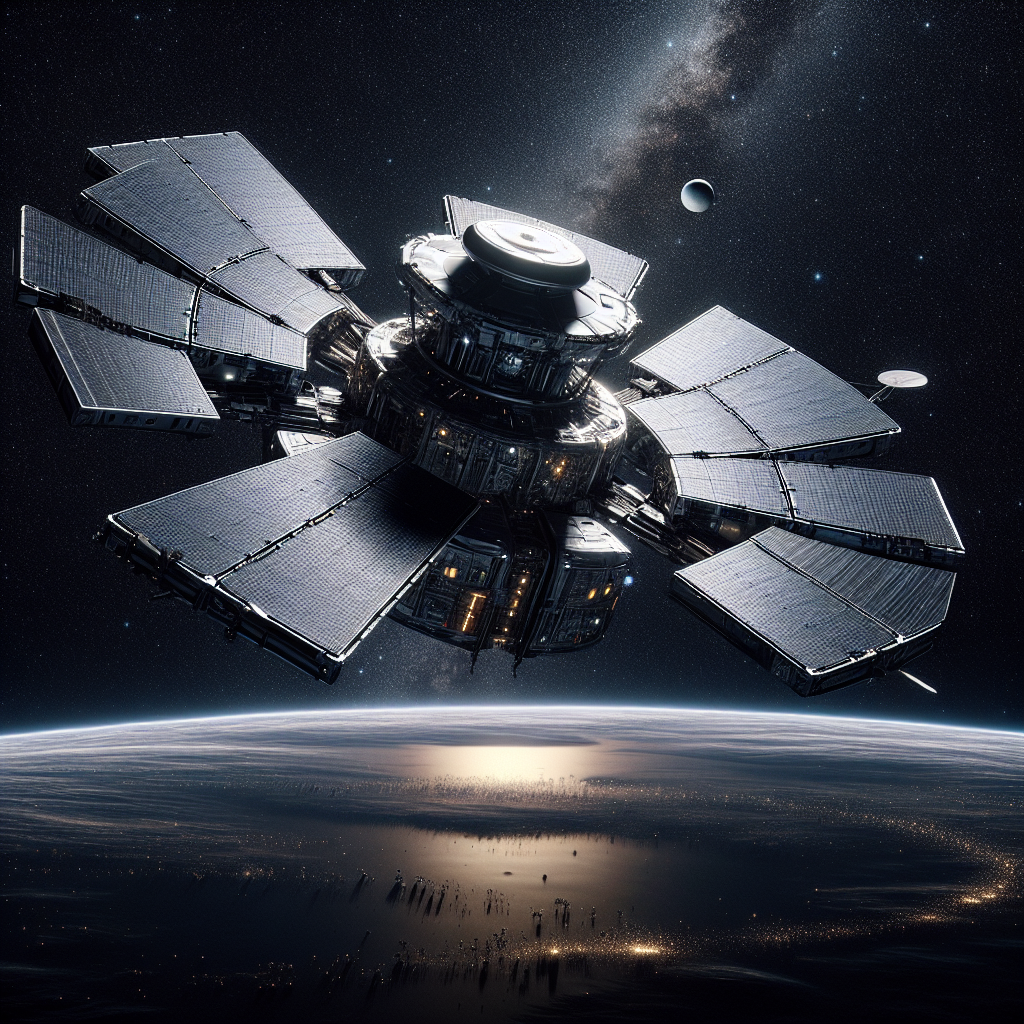
NASA’s Lunar Trailblazer mission officially ended on July 31 after mission control lost contact with the small satellite just one day following its February 26 launch, preventing it from mapping water on the Moon as planned.[1] A detailed post-mission report from NASA highlights the key failure: the spacecraft’s solar arrays failed to orient properly toward the Sun, depleting its batteries and halting all operations.[1]
The Launch and Swift Loss of Contact
Lunar Trailblazer, a compact satellite under NASA’s Lunar Discovery and Exploration Program, hitched a ride on Intuitive Machines’ IM-2 robotic lunar lander. The mission blasted off at 7:16 p.m. EST on February 26 from Kennedy Space Center in Florida aboard a SpaceX Falcon 9 rocket.[1] About 48 minutes after liftoff, the spacecraft separated successfully from the rocket and began its journey toward the Moon.
Operators at Caltech’s IPAC in Pasadena established initial two-way communications at 8:13 p.m. EST that same evening, a promising start for this high-risk, low-cost venture.[1] However, contact vanished the very next day. Without reliable communication, the team could neither diagnose issues nor fire the thrusters needed to maintain the spacecraft’s trajectory to lunar orbit.[1]
For months, global collaborators—including volunteer groups—scanned the skies with ground radar and optical telescopes. These efforts revealed Lunar Trailblazer in a slow spin, drifting farther into deep space.[1] As distance grew, its signals weakened beyond recovery, sealing the mission’s fate. NASA formally ended operations on July 31, shifting focus to lessons learned.[1]
What the Data Revealed: Solar Array Misalignment
Limited telemetry received before blackout painted a clear picture of the culprit. The spacecraft’s solar arrays did not deploy or align correctly with the Sun, starving the batteries of power.[1] This critical failure cascaded: no energy meant no attitude control, no thruster burns, and no path corrections.
Experts note this as a classic smallsat vulnerability. Unlike larger probes with redundant systems, Lunar Trailblazer’s compact design prioritized affordability and speed, amplifying risks.[1] “At NASA, we undertake high-risk, high-reward missions like Lunar Trailblazer to find revolutionary ways of doing new science,” said Nicky Fox, NASA’s Science Mission Directorate associate administrator.[1] Despite the setback, Fox emphasized its value in de-risking future small satellite efforts for sustained lunar presence.
A Technological Legacy Amid Disappointment
Though Lunar Trailblazer never reached the Moon, its instruments and expertise endure. Principal investigator Bethany Ehlmann of Caltech called the science payloads “world class,” predicting their influence on upcoming projects.[1] The mission carried two key instruments: NASA’s HVM 3 for hydrogen mapping and the UK Space Agency-funded LTM from the University of Oxford for thermal mapping—both poised to “cross-pollinate” to other lunar water studies.[1]
Caltech led science and operations, with NASA’s Jet Propulsion Laboratory (JPL) handling engineering, navigation, and the HVM 3 instrument. Lockheed Martin built the spacecraft, while Marshall Space Flight Center oversaw program management.[1] This collaboration underscores how even failed missions advance collective knowledge, refining designs for Artemis-era smallsats.
Broader Context: Challenges in NASA’s Lunar Push
Lunar Trailblazer’s loss arrives amid other hurdles in NASA’s Moon program. While unrelated, the Artemis II crewed mission—slated to loop the Moon—faces its own delays. A helium flow interruption in the Boeing-built Space Launch System rocket prompted a rollback from Kennedy’s launchpad to the Vehicle Assembly Building, scrapping a March 6 target and pushing to April at earliest.[2][4] NASA Administrator Jared Isaacman acknowledged the frustration, noting similar issues plagued SLS’s 2022 debut.[2]
These incidents highlight the razor-thin margins of spaceflight. Orbital windows for lunar trips demand precise alignments, and fixes like helium retesting under cryogenic conditions add weeks or months.[3] Yet, they also demonstrate NASA’s rigorous safety ethos, ensuring crewed missions like Artemis II proceed only when ready.
Lessons for the Future of Lunar Exploration
Lunar Trailblazer’s story is one of bold ambition meeting harsh reality. High-reward science—probing lunar water for future habitats—requires embracing failure as a teacher.[1] The mission’s spin into deep space may seem a quiet end, but its data and hardware pave the way for resilient successors.
As NASA gears up for human lunar returns, small missions like this test the waters (pun intended). Ehlmann’s optimism rings true: “We’re immensely disappointed… but this collective knowledge… will cross-pollinate.”[1] With Artemis delays in the news, Trailblazer’s report reminds us progress is iterative—each glitch a step toward the Moon’s sustained exploration.
In space, not every launch ends in triumph, but every mission, success or not, sharpens the tools for tomorrow. NASA’s transparency in detailing the solar array failure ensures the next Trailblazer won’t repeat it.[1]
(Word count: 812)
Original source: NPR News – NASA lost a lunar spacecraft one day after launch. A new report details what went wrong
