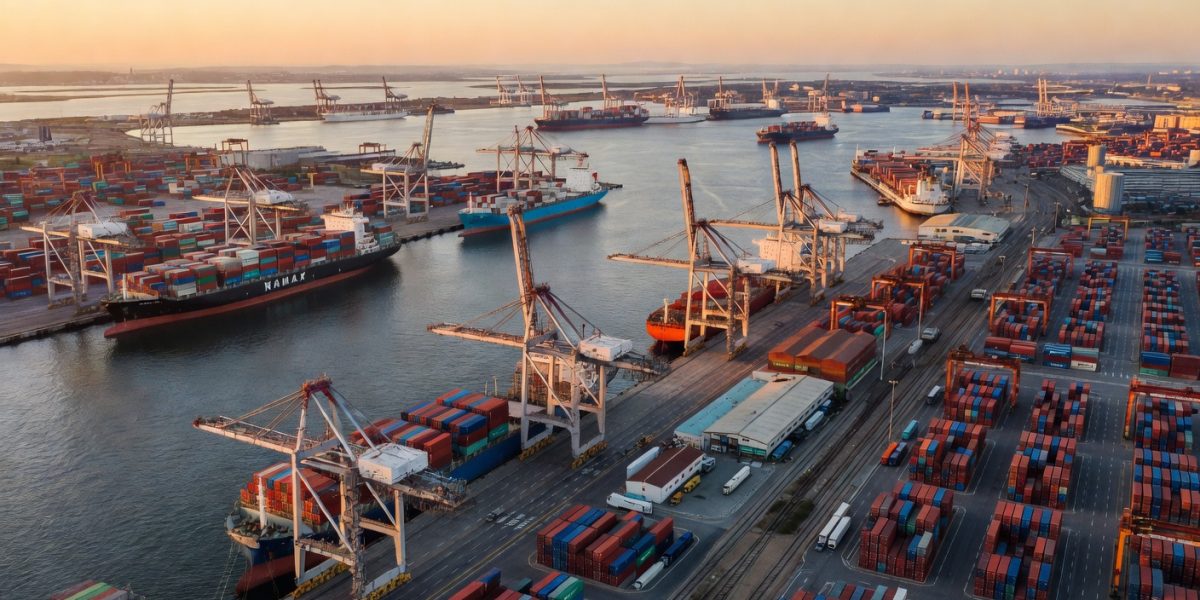
The Strait of Hormuz — through which approximately 20% of the world’s traded oil passes daily — has re-emerged as a critical fault line in global energy markets. With Iran signalling the possibility of levying transit fees on commercial vessels, and Middle East instability continuing to drive crude price volatility, European executives face a compounding set of geopolitical risk for business that demands strategic reassessment, not reactive management.
Energy Security and the New Economics of Disruption
The prospect of an Iranian-imposed toll on Strait of Hormuz passage is not merely a shipping cost issue — it is a systemic shock vector. Energy experts and KPMG analysts warn that sustained disruption to this chokepoint would amplify inflationary pressures already embedded in the global economy. The OECD projects US inflation reaching 4% in 2026, with bond yields rising across most major markets. For European mid-market firms in food processing, specialty chemicals, and automotive manufacturing, the downstream effects — from input cost inflation to logistics repricing — are material and immediate.
Simultaneously, the Ukraine conflict shows no signs of structural resolution. Putin’s 32-hour Easter ceasefire on April 9, 2026 was a tactical gesture, not a strategic pivot. KPMG forecasts continued conflict through 2026, with hybrid threats — particularly cyber attacks on critical infrastructure — intensifying across European operational environments. CFOs and General Counsel should treat energy supply continuity and cyber resilience as interconnected balance sheet risks, not siloed operational concerns.
Infrastructure Investment: $4.5 Trillion in Opportunity, Constrained by Execution Risk
Against this backdrop of geopolitical fragmentation, a parallel megatrend is accelerating: a global infrastructure buildout now valued at $4.5 trillion, driven by energy transition imperatives, AI infrastructure demand, and demographic growth pressures. For M&A Directors and CTOs evaluating capital allocation, this represents a generational opportunity — but one where execution risk is disproportionately high.
Geopolitical complexity is reshaping which markets are viable for long-horizon infrastructure investment. Europe, India, and Southeast Asia are emerging as relatively resilient deployment environments, while Middle East and Russia-adjacent supply chains are being repriced for political risk. The US Inflation Reduction Act (IRA) continues to attract capital into renewables and critical minerals, though European policymakers are actively countering with their own green industrial frameworks to prevent capital flight.
Sustainability is no longer a reputational overlay — it is structurally integrated into infrastructure investment underwriting. Climate constraints, real estate vulnerability to physical risk, and evolving ESG disclosure requirements (including CSRD in Europe) are reshaping asset valuations and deal structures. Board members approving major capital commitments in 2026 should expect sustainability and climate risk assessments to be standard components of investment committee materials.
Implications for European Decision-Makers
The convergence of Middle East instability, Ukraine conflict spillover, and the energy transition creates a non-linear risk environment. European executives should consider the following strategic priorities:
- Energy procurement diversification: Reassess supplier concentration risk and accelerate hedging strategies for oil, gas, and electricity inputs, particularly for manufacturing-intensive operations.
- Cyber resilience as board-level agenda: With hybrid warfare tactics targeting critical infrastructure, European firms must align cyber investment with geopolitical threat modelling — not just compliance frameworks.
- Infrastructure M&A due diligence: Geopolitical risk scoring should be embedded in target screening for any asset with supply chain, energy, or logistics exposure to conflict-adjacent regions.
- ESG integration in capital strategy: CSRD compliance timelines are firm. Firms that treat sustainability reporting as a disclosure exercise rather than a strategic input will face valuation discounts in both debt and equity markets.
Key Takeaway
The Strait of Hormuz is a proxy for a broader structural shift: geopolitical risk for business is no longer episodic — it is endemic. European firms that treat energy security, cyber resilience, and sustainable infrastructure investment as integrated strategic priorities — rather than discrete risk management workstreams — will be better positioned to protect margins, maintain stakeholder confidence, and capture the upside of a $4.5 trillion infrastructure cycle that is already underway.
