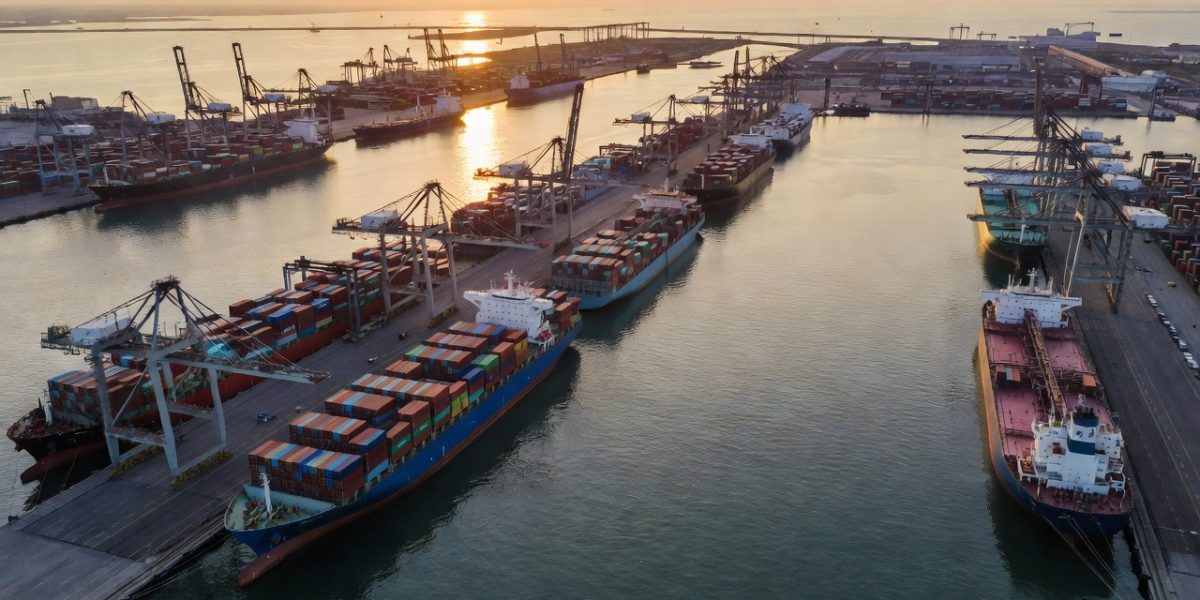
When commercial shipping through the Strait of Hormuz fell to a handful of vessels per day — against a baseline of approximately 130 — the disruption was not merely a headline risk. It was a stress test of global energy infrastructure, insurance frameworks, and corporate supply chain resilience. The emerging protocol between Iran and Oman to reopen the waterway has triggered a relief rally in oil markets, but for CFOs, General Counsel, and M&A Directors, the more important signal lies beneath the surface: geopolitical risk for business is no longer episodic — it is structural.
The Hormuz Bottleneck: Scale of Disruption and the Limits of Diplomatic Relief
The Strait of Hormuz channels approximately 20% of global oil flows and a significant share of LNG exports, making it the single most consequential maritime chokepoint in the world. The near-standstill in traffic precipitated an immediate spike in war-risk insurance premiums, disrupted just-in-time supply chains across European manufacturing and energy sectors, and introduced acute volatility into commodity pricing across multiple asset classes.
The Iran–Oman negotiation offers a credible near-term pathway to normalisation. Oman’s historically neutral diplomatic posture and its established back-channel relationships with Tehran make it a structurally sound mediating party. However, analysts at BlackRock Investment Institute and S&P Global caution that without institutionalised de-escalation mechanisms — binding protocols, third-party monitoring, or multilateral guarantees — the relief is fragile. A single incident in the Gulf could reverse the current trajectory within days.
For European mid-market exporters and importers reliant on Gulf shipping lanes, this ambiguity translates directly into planning uncertainty. Energy input costs, freight rates, and insurance premiums remain elevated relative to pre-2022 baselines, compressing margins at precisely the moment when financing conditions are tightening.
IMF Scenarios and the Macro Context for Capital Allocation
The IMF’s latest outlook maintains a 3.1% global growth baseline but flags a materially adverse scenario of 2.5% growth if energy-supply disruptions and hostilities persist. That 60-basis-point differential is not academic: it maps directly onto export demand, input cost trajectories, and the cost of capital for mid- and large-cap firms across Europe and Asia.
Simultaneously, geopolitical risk dashboards from BlackRock and S&P Global highlight three compounding pressures: Middle East conflict escalation, accelerating US–China technology decoupling, and rising trade protectionism — including tariffs and export controls on AI chips and critical minerals. For European industrial groups and infrastructure investors, this creates a complex overlay: supply chain reconfiguration costs are rising while the regulatory environment for cross-border investment grows more restrictive.
The energy transition adds a further dimension. Infrastructure investment in renewables, grid modernisation, and LNG import terminals — already accelerated by the post-2022 European energy security imperative — must now be stress-tested against scenarios in which Gulf supply disruptions become recurrent rather than exceptional. ESG-aligned real estate and infrastructure portfolios face dual pressure: climate risk on one axis, geopolitical risk on the other.
Corporate Geopolitical Risk Disclosure: From Compliance to Competitive Advantage
Data from the U.S. Chamber of Commerce Foundation and CEO-level surveys confirm a sharp rise in geopolitical risk disclosures since 2019, with mid- and large-cap firms increasingly embedding scenario planning for sanctions, trade barriers, and energy-price shocks into their strategy and capital allocation frameworks. This is no longer a reputational exercise — it is becoming a governance expectation for boards and a due diligence requirement in M&A transactions.
For General Counsel and Compliance Officers, the practical implications include:
- Contract architecture: Force majeure clauses and material adverse change provisions must be reviewed and updated to explicitly address geopolitical triggers, including chokepoint disruptions and sanctions cascades.
- Counterparty risk: Supplier and customer concentration in Gulf-exposed markets warrants formal reassessment, particularly for firms with single-source dependencies on energy or raw material inputs.
- M&A due diligence: Geopolitical risk scoring should be integrated into target assessment frameworks, with specific attention to supply chain geography, regulatory jurisdiction, and sanctions exposure.
- Insurance and hedging: War-risk and political risk insurance coverage should be reviewed against current premium environments and policy exclusions.
Implications for Decision-Makers: Building Durable Resilience
The Iran–Oman protocol is a positive development, but it does not resolve the underlying structural volatility in global energy and trade systems. For boards and executive teams, the strategic imperative is clear: geopolitical risk management must be elevated from a risk committee agenda item to a core input in capital allocation, M&A strategy, and infrastructure investment decisions.
European firms, in particular, occupy a complex position — deeply integrated into global supply chains, subject to an increasingly assertive EU regulatory framework on supply chain due diligence and sustainability reporting, and exposed to both US–China decoupling dynamics and Middle East energy volatility. Resilience planning that addresses all three vectors simultaneously is no longer optional.
Key takeaway: The Hormuz relief rally buys time, not certainty. Firms that use this window to stress-test supply chains, update contractual protections, and integrate geopolitical scenario planning into their investment frameworks will be structurally better positioned when — not if — the next disruption materialises.
