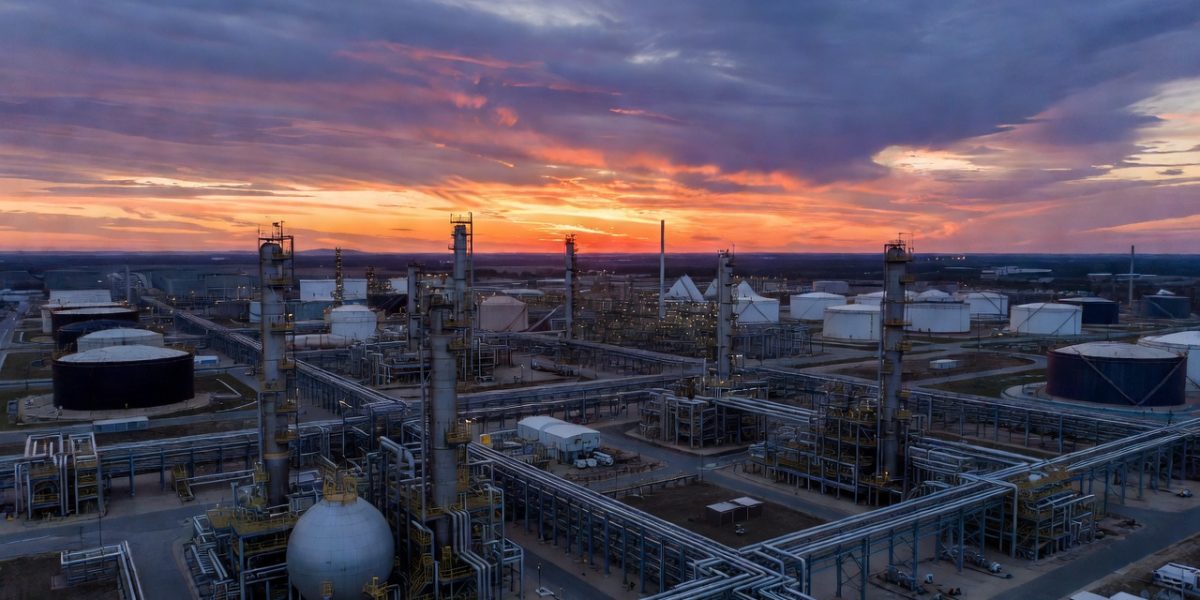
The escalation of the Iran conflict into a full-scale global energy crisis has forced a fundamental reassessment of how businesses price risk, allocate capital, and structure their operational resilience. According to the BlackRock Investment Institute (May 2026), the threat to the Strait of Hormuz — through which approximately 20% of global oil supply transits — has triggered the most severe energy disruption since the 1973 oil embargo. For CFOs, General Counsel, and board members, this is no longer a geopolitical footnote: it is a balance sheet event.
Geopolitical Risk Has Become Permanently Embedded in Corporate Strategy
The data tells a clear story. References to geopolitical risk in Fortune 250 financial disclosures have doubled since 2019 and quadrupled since 2009. This trajectory confirms what many strategic advisors have argued for years: geopolitical exposure is no longer a cyclical variable to be managed in quarterly risk reviews. It is a structural driver of enterprise value.
Simultaneously, the United States is pursuing a renewed wave of reciprocal tariffs targeting China, the automotive sector, metals, and critical minerals. These measures are projected to accelerate inflationary pressures and dampen global GDP growth — compounding the energy price shock already coursing through European manufacturing and logistics chains. For M&A Directors evaluating cross-border transactions, the implications are significant: deal assumptions built on stable trade corridors and predictable input costs require urgent stress-testing.
European businesses face a particular exposure. The EU’s energy transition agenda — anchored in REPowerEU and the Green Deal Industrial Plan — was predicated on a managed shift away from fossil fuel dependency. The current crisis has compressed that timeline while simultaneously increasing short-term demand for liquefied natural gas (LNG) and alternative supply routes, creating a paradox that complicates both infrastructure investment planning and sustainability commitments.
Energy Infrastructure Vulnerability: The Cyber Dimension
Beyond physical supply disruption, cyberattacks on digitized energy infrastructure have emerged as one of the top geopolitical risks of 2025–2026. The accelerating digitalization of the energy sector — from smart grids to automated pipeline management — has expanded the attack surface available to state-sponsored and non-state threat actors alike. Critical infrastructure operators across Europe, already subject to the NIS2 Directive (which came into force in October 2024), are now under intensified regulatory and operational pressure to demonstrate cyber resilience.
For CTOs and General Counsel, this intersection of physical and digital risk creates a dual compliance burden. NIS2 mandates incident reporting within 24 hours and requires entities in the energy, transport, and financial sectors to implement robust risk management frameworks. Non-compliance carries fines of up to €10 million or 2% of global annual turnover. The legal and reputational exposure from a cyber-induced infrastructure failure — in the current geopolitical climate — is existential for some operators.
Deglobalization Is Repricing Assets and Restructuring Supply Chains
The broader deglobalization trend is accelerating the fragmentation of global value chains, with lasting consequences for real estate markets and infrastructure investment. Nearshoring and friend-shoring strategies are driving demand for industrial real estate in Southern and Central Europe, while simultaneously reducing appetite for logistics assets dependent on trans-Pacific or Middle Eastern trade corridors.
Investors are adjusting portfolio positioning accordingly. Infrastructure funds with exposure to energy transition assets — renewables, grid modernization, hydrogen — are seeing renewed inflows, as the strategic case for energy independence converges with the financial case for stable, regulated returns. However, the risk premium on projects with supply chain dependencies in conflict-adjacent geographies has risen materially.
Implications for Decision-Makers
- Reassess capital allocation frameworks to incorporate geopolitical scenario analysis as a standing input — not a periodic supplement — to investment committee processes.
- Stress-test M&A assumptions against energy price volatility, tariff escalation, and supply chain disruption; transaction structures should include appropriate MAC clauses and price adjustment mechanisms.
- Accelerate NIS2 compliance for entities operating in critical sectors; legal exposure from cyber incidents is now compounded by reputational risk in a heightened threat environment.
- Evaluate real estate and infrastructure portfolios for nearshoring beneficiaries and energy transition assets, while reducing concentration in trade-dependent logistics corridors.
- Engage boards proactively on geopolitical risk governance — regulators and institutional investors increasingly expect documented oversight frameworks at the board level.
Key Takeaway
The Iran crisis is a catalyst, not a cause. The structural forces reshaping global business — deglobalization, energy insecurity, digital infrastructure vulnerability, and trade protectionism — were already in motion. What has changed is the speed and severity of their convergence. Businesses that treat geopolitical risk as a permanent feature of their operating environment, rather than an exceptional circumstance, will be better positioned to protect value and identify opportunity in the volatility ahead.
