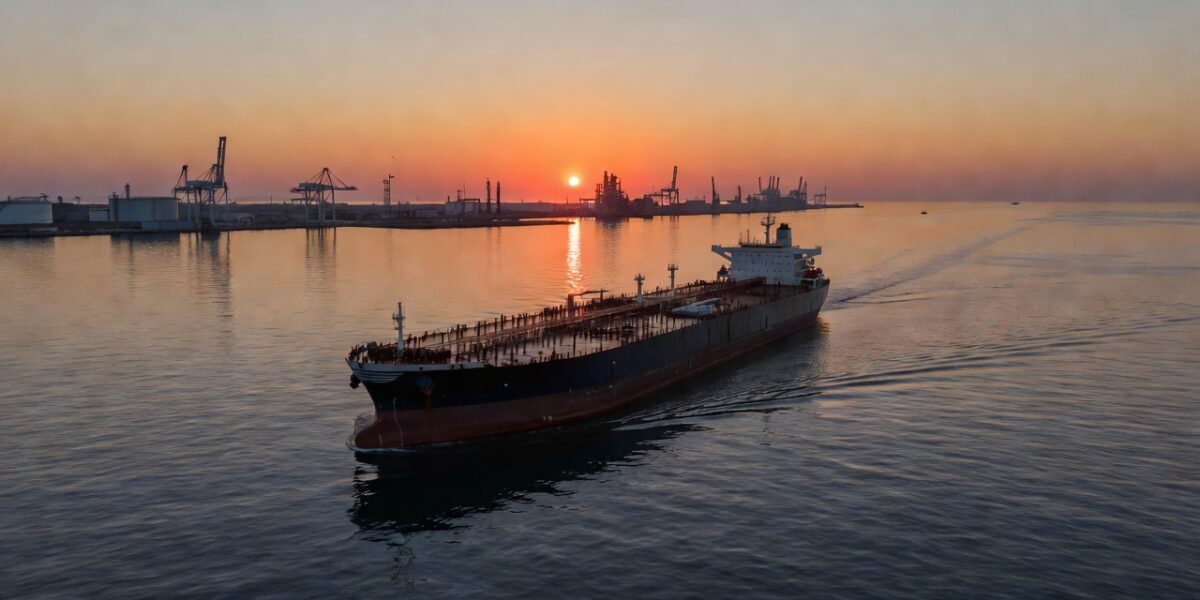
The escalation of the Iran conflict into a full-scale global energy crisis marks an inflection point that boardrooms can no longer treat as a tail risk. With President Trump reimposing a naval blockade on Iranian ports and Iran launching retaliatory strikes on U.S. infrastructure, the Strait of Hormuz — through which approximately 20% of the world’s oil supply transits daily — has become the most consequential chokepoint in global commerce since the 1973 oil embargo. For European executives managing cross-border operations, capital allocation, and compliance obligations, the strategic implications are immediate and structural.
Energy Security Is No Longer an Abstraction: The Business Case for Reassessment
The current crisis represents the most severe disruption to global energy flows in over five decades, and its effects are already visible in market behaviour. Oil prices have surged on supply-shock fears, global equity markets have turned cautious, and the cost of hedging energy exposure has risen sharply across commodity derivatives markets.
For European companies, the exposure is compounded by the continent’s structural dependence on imported energy and the still-incomplete transition away from fossil fuels. The EU’s REPowerEU framework — designed precisely to reduce dependency on volatile supply corridors — now faces renewed urgency. Yet the energy transition itself introduces a second layer of geopolitical risk: the critical minerals required for battery storage, wind turbines, and EV infrastructure are disproportionately sourced from geopolitically sensitive regions, including China and the broader Indo-Pacific.
CFOs and treasury teams should treat energy price volatility not as a cyclical hedge problem but as a scenario-planning imperative. Stress-testing P&L models against a sustained 30–40% increase in energy input costs — consistent with prior Hormuz disruption scenarios — is no longer a theoretical exercise.
Technology Decoupling and Tariff Regimes: The Structural Shift Beneath the Headlines
The Iran crisis does not exist in isolation. It is accelerating a broader fragmentation of the global economic order that was already underway. The Trump administration’s reciprocal tariff regime — targeting Chinese goods, autos, metals, and critical minerals, alongside new landing fees on Chinese-flagged vessels — is generating measurable inflationary pressure and slowing growth forecasts across the OECD.
Simultaneously, U.S.-China technology decoupling is reshaping capital flows and infrastructure investment decisions at scale. TSMC’s reported 59% surge in net profit for Q2 2025, driven by AI infrastructure demand, illustrates how technology supply chains are being restructured around national security logic rather than pure efficiency. For M&A Directors and CTOs evaluating cross-border transactions or technology partnerships, this is a material due diligence variable — not a footnote.
The data reinforces the urgency: references to geopolitical risk in Fortune 250 financial disclosures have more than doubled since 2019 and quadrupled since 2009, spanning every economic sector. This is no longer a concern exclusive to multinationals with emerging-market exposure. Mid-market European firms with single-tier supply chains in Asia are equally vulnerable to tariff cascades and export control tightening.
Implications for Business: From Risk Disclosure to Strategic Repositioning
The convergence of energy insecurity, trade protectionism, and technology nationalism demands a coordinated response across the C-suite. Key priorities for decision-makers include:
- Supply chain architecture review: Map single-source dependencies in critical inputs — energy, semiconductors, industrial metals — and model alternative sourcing corridors aligned with EU strategic autonomy objectives, including the Critical Raw Materials Act.
- M&A and investment screening: Integrate geopolitical risk scoring into deal origination frameworks. Transactions involving counterparties with material exposure to sanctioned jurisdictions or dual-use technology require enhanced regulatory diligence under both EU and U.S. export control regimes.
- Sustainability and ESG recalibration: Boards should anticipate that sustainability commitments — particularly Scope 3 emissions targets and responsible sourcing obligations under the EU Corporate Sustainability Due Diligence Directive (CS3D) — will face implementation friction as supply chains are restructured under geopolitical pressure. Proactive stakeholder communication is essential.
- Real estate and infrastructure investment: Energy cost volatility directly impacts the valuation and operating economics of energy-intensive real estate assets and logistics infrastructure. Investors and asset managers should revisit cap rate assumptions and green building retrofit timelines in light of revised energy price scenarios.
Key Takeaway
The Iran crisis is not a discrete geopolitical event — it is a stress test of every assumption embedded in your current operating model. The firms that will navigate this period most effectively are those that have already institutionalised geopolitical risk as a board-level discipline, integrated it into capital allocation decisions, and built the organisational agility to reposition as the landscape shifts. The window for reactive adjustment is narrowing. Strategic clarity, exercised now, is the only durable competitive advantage.
