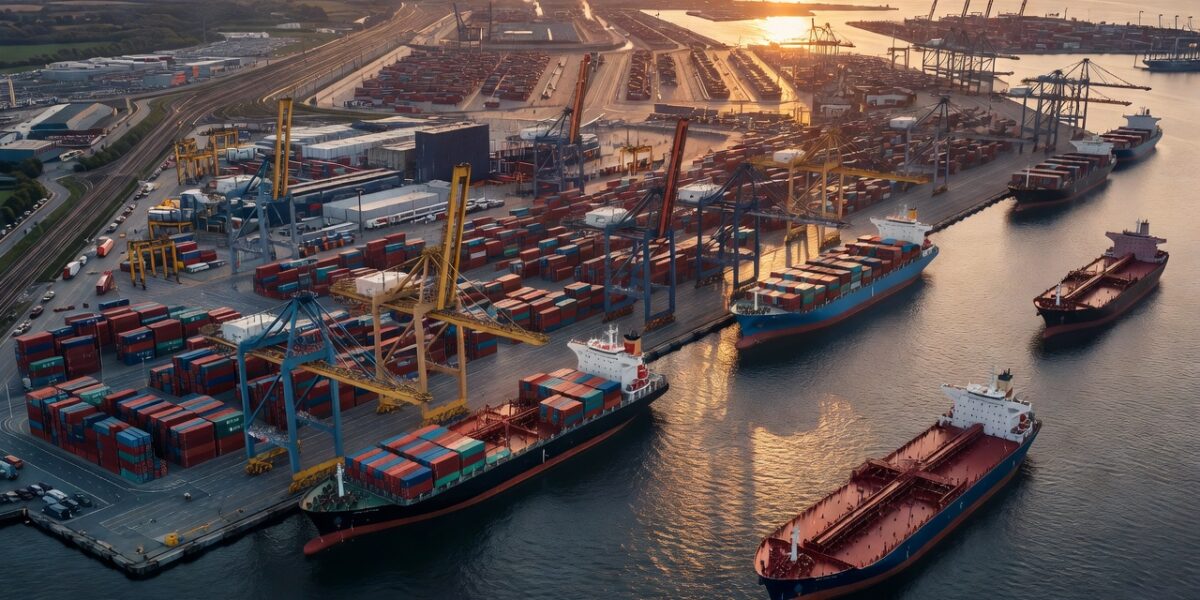
The geopolitical landscape shifted materially in the past 48 hours. Fresh U.S. airstrikes on Iran, combined with the revocation of a waiver permitting Iranian oil exports to global markets, have placed the Strait of Hormuz — a chokepoint through which approximately 20% of the world’s traded oil passes — at the centre of corporate risk assessments. Simultaneously, Ukraine’s sustained attacks on Russian refining infrastructure are driving European diesel prices higher, compressing margins across transport, logistics and manufacturing. For CFOs, General Counsel and M&A Directors operating in or exposed to European markets, the convergence of these two supply shocks demands immediate strategic attention.
Energy Price Volatility: From Geopolitical Event to Balance Sheet Risk
BlackRock’s Investment Institute has characterised the Iran conflict as a global event with structural implications for energy markets, defense investment and capital allocation — not a transient headline risk. The revocation of Iran’s oil-sales waiver effectively removes a meaningful volume of supply from global markets at a moment when European diesel inventories are already under pressure from refinery disruptions in Russia.
For mid-market and large-cap European companies, the transmission mechanism is direct. Fuel costs are a first-order input for logistics operators, agricultural producers, construction firms and manufacturers. A sustained 10–15% increase in diesel prices — already visible in spot markets — can erode EBITDA margins by one to three percentage points in asset-heavy sectors. Companies that have not stress-tested their energy cost assumptions against a Hormuz-disruption scenario are carrying unpriced risk on their income statements.
From an infrastructure investment and sustainability perspective, the crisis reinforces the strategic case for accelerating energy transition investments. Firms with diversified energy procurement — including power purchase agreements, on-site renewables and hedged fuel contracts — are demonstrably more resilient. This is no longer a sustainability narrative; it is a treasury and risk management imperative.
European Strategic Autonomy: Defense Spend as an Industry Trend
The announcement of a $50 billion NATO initiative led by the UK, France and Germany to accelerate long-range weapons development — explicitly structured without U.S. involvement — signals a structural reorientation of European defense-industrial policy. This is consequential beyond the defense sector itself.
For M&A Directors and investors, the initiative creates a durable demand signal for dual-use technologies, advanced manufacturing, semiconductors, satellite communications and cybersecurity. European governments are increasingly willing to deploy sovereign capital and procurement guarantees to build domestic industrial capacity, reducing the traditional risk premium associated with defense-adjacent technology investments.
General Counsel should note that this shift carries compliance and export-control implications. Transactions involving European defense-industrial assets will face heightened scrutiny under the EU Foreign Subsidies Regulation, national security review mechanisms (including the UK’s National Security and Investment Act and Germany’s Foreign Trade and Payments Act), and evolving NATO interoperability standards. Due diligence frameworks must be updated accordingly.
Geopolitical Risk Transmission into Capital Allocation and M&A
The current environment illustrates how geopolitical risk for business is no longer confined to emerging markets or extractive industries. It is now a core variable in European corporate finance, real estate markets and infrastructure investment decisions. Assets with direct or indirect exposure to energy costs, cross-border logistics or Middle Eastern counterparties require scenario-weighted valuation adjustments.
Specific areas warranting immediate board-level review include:
- Supply chain concentration: Companies with single-source suppliers in regions exposed to Hormuz shipping lanes should accelerate diversification and near-shoring assessments.
- Debt covenant sensitivity: Rising input costs and potential revenue pressure may trigger EBITDA-linked covenants in leveraged capital structures. CFOs should model downside scenarios with lenders proactively.
- M&A pipeline repricing: Targets in logistics, energy-intensive manufacturing and fuel distribution may see valuation compression, creating selective acquisition opportunities for well-capitalised strategic buyers.
- Infrastructure investment re-rating: European energy infrastructure — LNG terminals, grid interconnectors, storage facilities — is likely to attract increased sovereign and institutional capital, compressing yields but improving asset liquidity.
Key Takeaway for Decision-Makers
The U.S.-Iran escalation and the parallel tightening of European fuel supply are not isolated events — they are interconnected shocks that are reshaping the cost structure, risk profile and strategic options of European businesses in real time. Boards and executive teams that treat this as a short-term market fluctuation risk misallocating capital and underestimating structural change. The firms best positioned to navigate this environment are those that have already integrated geopolitical scenario planning into their capital allocation, M&A due diligence and sustainability strategies — and those that act now to close the gap.
